Learn › Technical subjects › Airplane Flight Controls and Systems
Airplane Flight Controls and Systems
An airplane is a set of surfaces and systems you are responsible for understanding before you move any of them. This is the ground knowledge behind every input you make.
Technical Subject Areas — FI.II.E
Why the control check exists
An airplane went up on a maintenance acceptance flight with the aileron controls rigged backwards. Everything about it looked normal on the ramp. The yoke moved freely, the surfaces moved, and the airplane was legally returned to service. It was only in the air that the roll went the wrong way.
That is the whole reason your preflight control check is free and correct and not just free. Freedom of movement you can feel through the yoke. Correctness you can only confirm by looking — yoke left, left aileron up, right aileron down, and the same discipline for elevator and rudder. On an airplane just out of maintenance, look twice.
The regulation behind that flight is 14 CFR 91.407(b). It prohibits carrying anyone other than crewmembers in an aircraft that has been maintained, rebuilt or altered “in a manner that may have appreciably changed its flight characteristics or substantially affected its operation in flight” until “an appropriately rated pilot with at least a private pilot certificate flies the aircraft, makes an operational check of the maintenance performed or alteration made, and logs the flight in the aircraft records.” All three parts matter: the certificate and rating, the operational check, and the logging. And 14 CFR 91.7(b) makes the pilot in command “responsible for determining whether that aircraft is in condition for safe flight,” every flight. The CFR is the authority and it changes, so read the current text of the section rather than trusting anyone's summary of it, including this one.
Three controls, three axes
Moving any primary control surface changes the airflow and the pressure distribution over the airfoil it is attached to. That is the entire mechanism. Everything else is bookkeeping about which axis you rotate around.
Ailerons live on the outboard trailing edge of each wing and move opposite each other. Roll the yoke right and the right aileron goes up while the left goes down. Down deflection increases camber and increases lift; up deflection decreases camber and decreases lift. More lift on the left, less on the right, and the airplane rolls right about the longitudinal axis.
The elevator is on the trailing edge of the horizontal stabilizer. Pull back and the trailing edge deflects up, creating a downward aerodynamic force on the tail; the tail goes down and the nose comes up about the CG. Push forward and the reverse happens. That is pitch, about the lateral axis. How effective it is depends on the airplane's stability, on power and thrustline, and on where the horizontal tail sits on the empennage.
The rudder is on the trailing edge of the vertical stabilizer. Push the left pedal and the rudder deflects left, generating a sideways force that pushes the tail right and yaws the nose left, about the vertical axis. Rudder effectiveness increases with airspeed, which is why the pedals feel dead on the takeoff roll and firm at cruise. Its primary job is not to turn the airplane — it is to counteract adverse yaw and keep the flight coordinated.
Adverse yaw, and what the designer did about it
The down-going aileron produces more lift, and more lift means more induced drag. So the wing that rises also slows slightly, and the nose yaws away from the direction of the roll. Adverse yaw gets worse at low airspeed and with larger aileron deflection — the slow, uncoordinated end of the traffic pattern, which is exactly where it matters most.
Name the hazard rather than stepping around it. The airplane that overshoots the turn from base to final, and gets hurried around with bottom rudder while opposite aileron holds the bank down, is slow, cross-controlled and close to the ground. That is the classic stall and spin accident, and the pattern is no place to explore it. Cross-controlled stalls, and spins where the airplane and the certificate call for them, are demonstration maneuvers — flown deliberately, at altitude, with an instructor, in an airplane approved for them. What belongs in the pattern is coordinated rudder and a go-around when the turn does not work out.
Designers attack adverse yaw three ways, and knowing which one your airplane uses tells you how much rudder to expect it to want. Differential ailerons raise one aileron farther than the other is lowered, adding drag on the descending wing. Frise-type ailerons pivot on an offset hinge so the raised aileron pushes its leading edge into the airflow, again adding drag on the descending wing, with a slot to keep the flow attached. Coupled ailerons and rudder link the two mechanically so aileron input produces rudder automatically. None of these eliminates adverse yaw; they reduce it. Your feet still have work to do.
Elevators that are not elevators
A T-tail puts the horizontal surface up out of the propeller wash and wing downwash, so control response is more consistent across flight regimes — but the elevator needs more deflection at slow speed to do the same work, which shows up on rotation and in the flare.
A stabilator replaces the fixed stabilizer and hinged elevator with one moving surface pivoting about a central hinge. The whole surface changes angle of attack, which makes it very sensitive to control input and to aerodynamic load, so it carries an anti-servo tab that deflects in the same direction as the surface. The tab goes into the slipstream and pushes back, giving you resistance so you do not overcontrol. Trim on a stabilator airplane is usually accomplished by repositioning that same tab.
Secondary controls
Secondary controls exist because a wing good at 120 knots is bad at 50. They buy you low speed and give the speed back when you retract them.
Flaps are the common ones — trailing edge, between the fuselage and the ailerons — and they increase both lift and drag for a given angle of attack. That gives you a slower approach speed and a steeper descent path without more airspeed. Partial flap shortens the takeoff run in some airplanes and not in others, and that is strictly a POH question: some trainers call for no flaps on a normal takeoff, and some prohibit flaps for takeoff altogether. Use the setting your own POH specifies and no other. Plain, split, slotted and Fowler are the types worth knowing apart.
Leading edge devices work on the front of the wing and do not all work the same way. A fixed slot adds no camber; it ducts high-pressure air from beneath the wing over the upper surface and delays separation, so the wing reaches a higher maximum coefficient of lift at a higher angle of attack. Cuffs and leading edge flaps do increase camber, and movable slats give you both effects when they extend. Spoilers disrupt flow over the wing to kill lift deliberately, which dumps weight onto the wheels for effective braking and adds drag; on gliders and some high-performance airplanes they also assist in roll.
A light trainer typically carries none of the leading edge devices and no spoilers. They cost weight, complexity and money to solve problems a slow, light, draggy airplane does not have, and their absence is a design decision rather than an oversight.
Trim
Trim does not fly the airplane. It relieves the control pressure you would otherwise hold, and that reduction in workload is the entire point. The order never changes: set power, set the pitch attitude you want, set the configuration, and only then trim off the pressure. Trimming to find an attitude instead of trimming to hold one is how people end up chasing the airplane.
The trim tab is the usual installation and it moves opposite the surface it trims: trim full nose-down and the tab goes full up. A balance tab is linked to the control rod and deflects opposite the surface automatically when you move the controls, easing the load; if that linkage is adjustable from the cockpit it does both jobs. An anti-servo tab works the same way but moves with the surface, adding resistance rather than removing it. A ground adjustable tab is a piece of metal on the rudder that a mechanic bends on the ground, by trial and error, to trim out a persistent yaw in cruise.
Electric trim deserves its own thought, because a trim runaway is a control problem, not a nuisance. Know before you fly where the disconnect is on your airplane, and know its circuit breaker by sight. Flying an airplane badly out of trim, and recovering from a runaway, are things to see demonstrated by an instructor at altitude before you ever meet them for real.
The constant-speed propeller
A fixed-pitch propeller gives you one blade angle and the RPM that results. A constant-speed propeller lets you select an RPM and holds it while conditions change, which is what makes the system worth understanding rather than memorizing.
The governor is a flyweight assembly spun by the engine, working against a speeder spring whose tension you set with the propeller control. When engine speed matches what you selected, the flyweights sit in equilibrium and no oil moves in or out of the hub. Let the RPM drop below the setting — you raised the nose, or the load increased — and the flyweights fall inward, moving the pilot valve, porting oil so that the blades go to a finer angle. A finer blade takes a smaller bite, the load drops and the RPM comes back up. Overspeed the propeller and the flyweights fly outward, the valve moves the other way, and the blades go coarser until the RPM settles. Whether oil entering the hub drives the blades coarse or fine depends on the propeller design, so read your own POH rather than generalizing from another airplane.
You verify all of this on the ground when you cycle the propeller during run-up. Pull the control back and look for three things:
- RPM drops — the blades went coarse and the load went up
- Manifold pressure rises — the engine is turning slower against the same throttle
- Oil pressure fluctuates as oil moves between the governor and the hub — which way it moves depends on the propeller design, so take the indication your POH describes as normal for your airplane
The RPM gauge is the only direct indication you have of what the propeller is doing. Everything else is inference, so an RPM that will not come back to the selected value is the failure signal, and the checklist is the response.
When the pitot or static system blocks
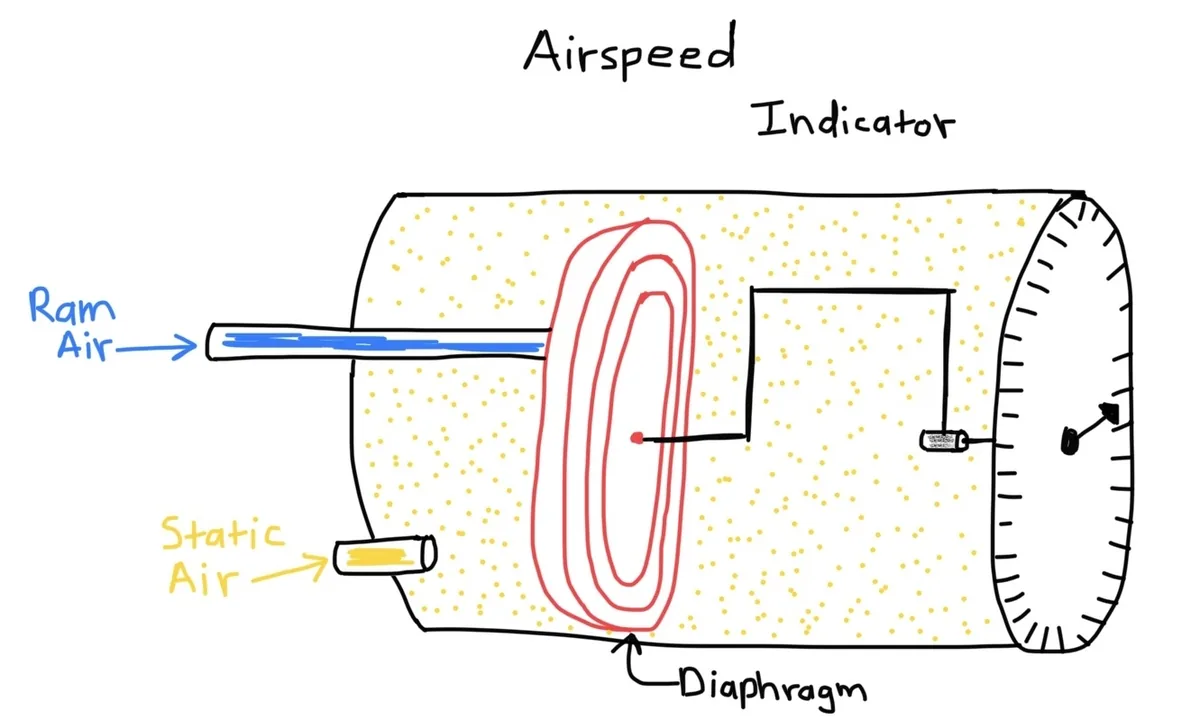
These are the failures examiners return to because the reasoning is clean. If the pitot ram air inlet blocks but the drain hole stays open, trapped pressure bleeds out and the airspeed indicator falls toward zero. If both the inlet and the drain block, the trapped pressure has nowhere to go and the airspeed indicator behaves like an altimeter — reading higher as you climb and lower as you descend.
Pitot heat is the preventive for ice, and only for ice. It will not clear or prevent an insect nest, a mud dauber's tube or any other foreign object in the system; the preventives there are the pitot cover on the ground and a preflight that actually looks into the tube and at the drain hole rather than past them.
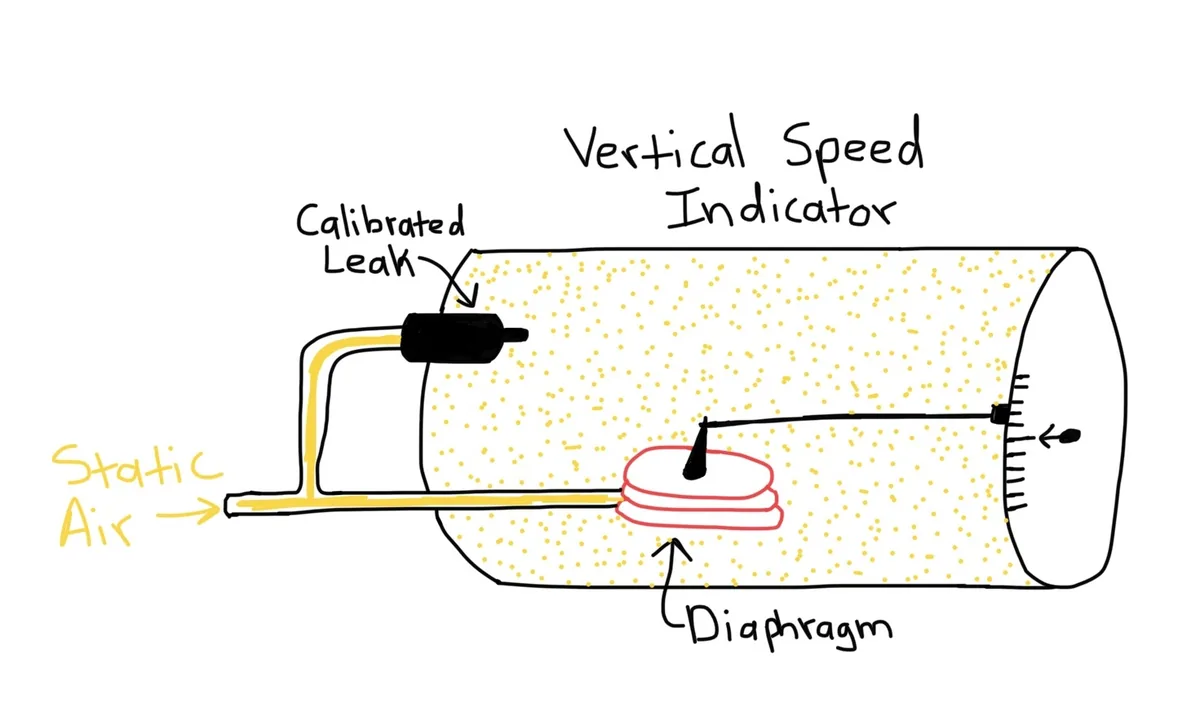
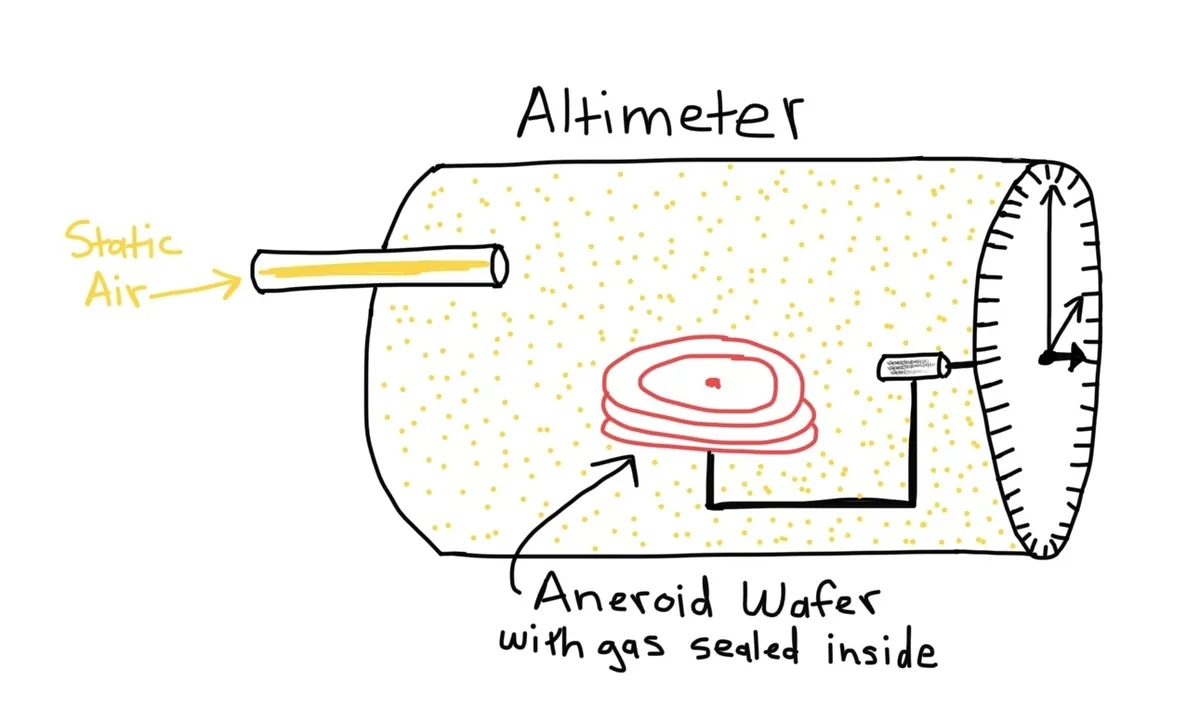
Block the static port instead and the altimeter freezes at the altitude where the blockage occurred, the vertical speed indicator settles at zero, and the airspeed indicator reads low above that altitude and high below it. The fix is the alternate static source. In an unpressurized cabin the pressure inside is slightly lower than outside, so expect the altimeter to read a little high, the airspeed to read a little fast, and the VSI to show a momentary climb before it stabilizes. Your POH gives the correction for your airplane, and some publish an airspeed correction table for alternate static; use that rather than a rule of thumb.
When something breaks
Whatever the system, the shape of the response is the same, and it is worth having in that order before you need it:
- Maintain aircraft control
- Analyze the situation
- Take the proper action — which usually means the checklist, not your memory
- Land as conditions require or permit
The same discipline applies to the autopilot, where the rule is that it will fly exactly what it was told. Know every way to disconnect yours — the yoke button, the trim switch, the soft key, and the circuit breaker as the last resort — and be willing to use them early. An autopilot doing something you do not understand is not a puzzle to solve at altitude.
Where you meet it next
On the checkride this is a ground discussion. Expect to be asked what each control is for, where it is, which way it moves and what it does, and then to talk through how a system behaves when it fails. The Flight Instructor ACS carries this as Task E under Technical Subject Areas, and the current ACS is the authority on what is actually required — read the task itself rather than a version of it handed down through instructors. In the airplane it shows up as the free-and-correct check, as the rudder you add when you roll, and as the trim you set after the attitude rather than instead of it.
- the rest of the library — principles of flight for where the three axes came from, and the performance and weather lessons that sit alongside this one
- Density altitude — the other half of the propeller story, since blade angle and available thrust both depend on the air the engine is breathing
- Flight Kneeboard — for the checklists you will be reaching for when a system quits
Figures